Anchorage & surrounding areas
Residential Solar Installation Anchorage
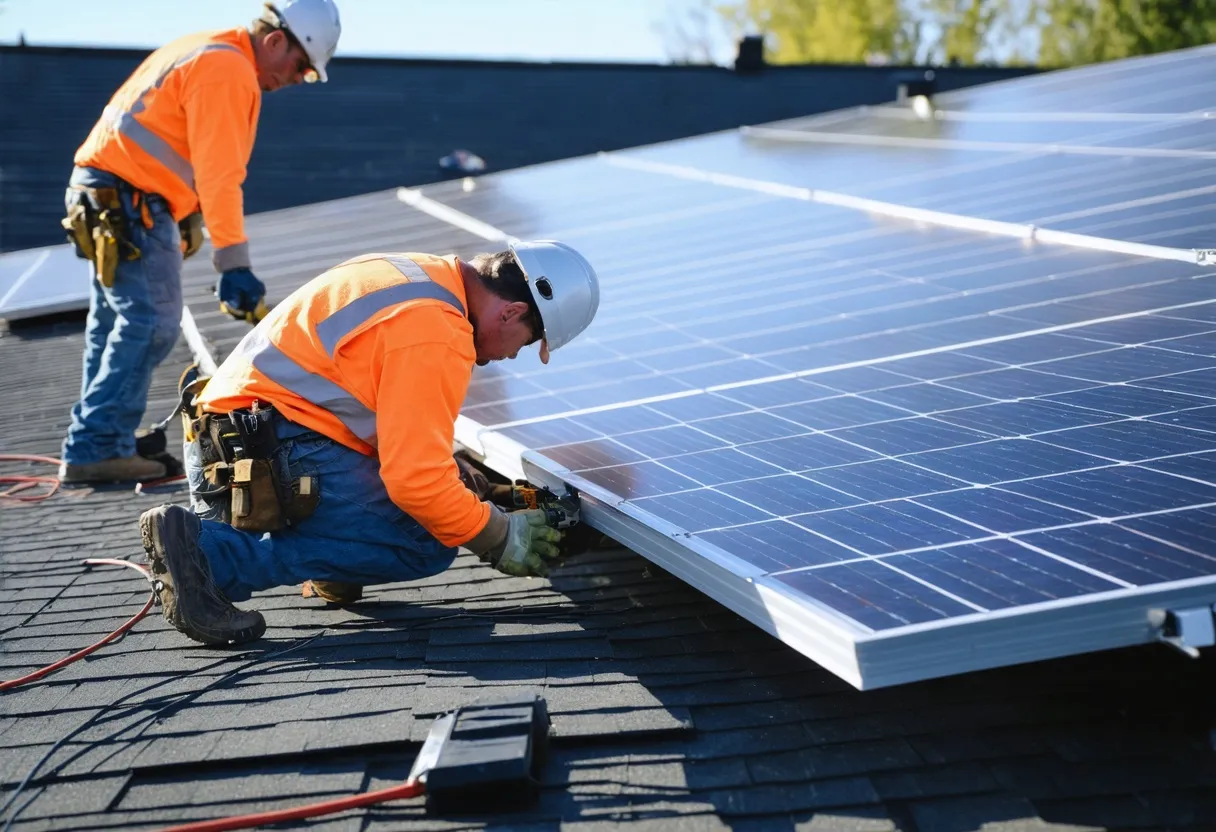
Search "residential solar installation Anchorage" and most of what comes back reads like it was written for a rooftop in Phoenix, then had the city name swapped out. That's the wrong starting point. An Anchorage roof deals with heavy wet snow loads, repeated freeze-thaw cycling on every fastener and flashing point, and a winter daylight window short enough that a system sized off a national annual-average estimate will disappoint from November through January no matter how many panels are on the roof.
None of that means home solar panels don't pencil out here — cold actually improves panel efficiency, and a well-placed array gets a real production bump off snow reflection. It means the engineering has to be done for this specific climate: racking specified for local snow load, an azimuth and tilt strategy that makes the most of a low winter sun angle, and a production estimate broken out by month rather than flattened into one annual number. This page walks through what that Alaska-specific engineering actually looks like, what drives cost, how Chugach Electric net metering fits into the picture, and what to check before you sign with any of the solar panel installers in Anchorage you're considering.
The Anchorage Installation Timeline, Step by Step
An installer evaluates roof pitch, structural condition, orientation, and how snow actually sheds and accumulates on your specific roofline before any design work starts.
Your household's electricity usage and Anchorage's seasonal daylight curve are modeled together, so the system is sized against a realistic winter-to-summer production swing rather than a flat annual figure.
Mounting hardware is specified for local snow and wind load, and any structural reinforcement the roof needs is identified before installation day, not discovered mid-project.
Your installer files the municipal electrical permit and submits the interconnection application to Chugach Electric — the paperwork stage that most often sets the real timeline, separate from on-site labor.
Racking, panels, wiring, and inverter go in over a short on-site window, followed by a municipal electrical inspection and utility permission-to-operate before the system is legally switched on.
Engineering for Snow Load and a Low Winter Sun Angle
The single biggest technical difference between an Alaska-engineered install and a copied Lower-48 design comes down to two things: what holds the panels down, and what angle they sit at.
Racking built for freeze-thaw and snow load
Anchorage roofs go through repeated freeze-thaw cycling every winter, which loosens hardware that isn't torqued and sealed for it, and heavy wet snow puts real load on both the racking and the roof structure underneath it. A properly engineered system specifies racking rated for local snow-load conditions, mounting height and spacing that account for how snow sheds off that particular roof pitch, and attachment points reviewed against the roof's structural capacity rather than a generic fastener schedule. Skipping this step is the most common way an out-of-market or inexperienced crew underbids a project — the racking looks the same on a proposal PDF, but it isn't specified for what an Anchorage winter actually does to a roof.
Tilt, azimuth, and the winter daylight constraint
Because Anchorage's winter daylight hours are short, a system's panel angle and orientation matter more here than in a climate with even year-round sun. Panel tilt and array orientation are set to capture as much of the low winter sun angle as the roof geometry allows, while still balancing summer output so the system isn't wildly oversized for six months and undersized for the other six. That's a design tradeoff, not a fixed formula, which is why a credible proposal shows month-by-month expected production instead of a single annual kWh number. If you want to see this constraint applied publicly rather than just described, the Municipality of Anchorage operates its own rooftop solar array — a real, grid-tied example of solar producing reliably in this exact climate, not a theoretical case study from somewhere warmer.
What a Locally-Engineered Solar Package Should Include
What Actually Drives Solar Panel Cost in Anchorage, AK
There's no single figure that represents "solar panel cost in Anchorage, AK" because price scales with several independent variables at once, and any quote that doesn't break these out separately is harder to compare against a competing proposal.
- System size in kW — set by your household's actual usage pattern, pulled from a full year of utility bills rather than a rough estimate.
- Roof complexity — a simple, single-plane roof mounts far more cheaply than one with multiple pitches, dormers, or a steep angle that complicates racking.
- Snow-load racking and structural reinforcement — not optional in this climate, and it's a real line item, not a place to cut corners for a lower number.
- Equipment tier — panel efficiency and manufacturer, plus string inverters versus microinverters, move price in both directions.
- Battery storage, if included — adds meaningful upfront cost and has to be sized against realistic winter production if backup power is the goal.
- Electrical panel upgrades — older homes sometimes need a service panel upgrade to safely accommodate solar, which adds to the total.
- Permitting and installer demand — local permitting fees and current scheduling backlog affect both price and how long the project takes end to end.
Because these interact, the only reliable number is a site-specific proposal for your roof and usage pattern — and the most useful way to compare two proposals is price per watt (total cost divided by system size in watts) rather than the bottom-line total alone, since a lower bottom line often means a smaller system, thinner racking, or a shorter workmanship warranty rather than an actual discount.
Proof That Belongs to Anchorage, Not a Brochure
The Municipality of Anchorage's own rooftop solar array has operated through Anchorage winters, which is a more useful reference point than a stock photo from a warmer state. Before you commit to any installer serving neighborhoods from Ingra St. and the urban core out to the wider Anchorage bowl, ask to see local residential projects that have run through at least one full winter, along with real production data — not just an estimate on a proposal.
Net Metering, Chugach Electric, and Banking Your Summer Surplus
Grid-tied solar in Anchorage works financially because of net metering, the billing arrangement that lets the surplus your system produces on long summer days offset the power you draw from the grid during short winter ones. In the Anchorage area, Chugach Electric is the utility most residential solar customers interconnect with, and its net metering program and interconnection requirements shape how a system is sized and designed from the very first site visit — not something bolted on after the fact.
Because Anchorage's production curve is heavily weighted toward summer, understanding exactly how your utility credits carry over month to month, what the interconnection application requires, and whether any capacity limits apply to your system size is essential before a design is finalized. A system engineered around this crediting structure from the start is what allows summer surplus to genuinely offset winter draw within the rules Chugach Electric actually applies — a system designed without that in mind can look fine on paper and still leave you short in December and January.
Net metering is also the reason a battery isn't required for a grid-tied system to make financial sense. It solves for the day-to-night and summer-to-winter balance on its own; a battery adds outage backup and time-of-use flexibility on top of that, which is a separate decision with its own cost tradeoff.
Residential Solar Installation Anchorage: Frequently Asked Questions
It depends on system size, roof complexity, racking and structural needs, equipment tier, and whether battery storage is included. Get a site-specific proposal and compare price per watt across quotes rather than relying on a generic national estimate.
Yes, when the system is sized around the seasonal curve rather than an annual average. Anchorage's winter daylight constraint pushes production toward summer, and net metering through Chugach Electric is what lets that summer surplus offset winter grid draw.
Not necessarily. A grid-tied system without a battery can offset your bill through net metering on its own, but it will shut off during a grid outage for safety. A battery adds backup power and resilience during winter storms at added upfront cost — it's a preference, not a requirement.
Physical installation is typically a short on-site window, but permitting and the Chugach Electric interconnection application usually take longer than the labor itself. Ask any installer for a realistic end-to-end timeline, not just an installation-day estimate.
Ask about current federal tax credit eligibility and whether a group-purchasing effort like the Anchorage Solarize program is active, since these initiatives run on funding cycles and eligibility windows that change — confirm current status before signing a contract.
Ask how they specify racking for your roof's snow load, request a month-by-month production estimate instead of a single annual figure, and ask to see local residential projects that have operated through at least one full winter with real production data behind them.
Request your free quote
See what a winter-ready system would look like on your home, with no pressure to move forward.
Get a system built for Anchorage winters
Reach out for a no-obligation quote sized to your roof and this climate.